
Island guide
Koh Chang
Thailand's third-largest island, most of it national park, four hours from Bangkok and still nothing like Phuket.
Where it is
Koh Chang lies off Trat province in the far east of Thailand, close enough to the Cambodian border that the mainland piers are an hour from it. It is the country's third-largest island and about four hours from Bangkok — a road journey and a short ferry rather than a flight, which is a large part of why it never became Phuket.
Mountain first, beach second
Most of Koh Chang is not beach at all. The interior is mountain and dense rainforest, protected as the core of the Mu Ko Chang National Marine Park, and no road crosses the middle of it. What is built here clings to a thin strip of the west coast, joined by a single road that climbs over a headland and drops into the next bay, over and over, all the way south.
What people come for
The island trades on its nature rather than its nightlife. Inland there are waterfalls and forest trails; offshore there are coral reefs and dive sites; in the south, fishing villages like Bang Bao serve the day's catch on platforms built over the water. The beaches are not interchangeable — each has its own crowd, and picking the wrong one is the commonest mistake people make here.
Getting here
From Bangkok by road
Buses and minivans run from Ekkamai and Mo Chit to Trat and the ferry piers — five to six hours. Many services sell a through-ticket that includes the ferry.
By air
Bangkok Airways flies Bangkok–Trat (TDX) in about an hour. The airport is about 20 km from the Koh Chang piers, taxis are waiting.
The ferry
Car ferries cross from the mainland piers near Laem Ngop to Koh Chang in 30–45 minutes, running through the day.
Pier to Lonely Beach
We do not run a pick-up service, but songthaew taxis wait at every arrival. Expect roughly 150–200 THB per person to Lonely Beach. Tell us your arrival time and we will be there to meet you with the keys.
Book a transfer to or from the island
Powered by the 12Go booking system.
The beaches
White Sand Beach
The island's main tourist strip and the first beach you reach from the pier: about a kilometre of sand backed solidly by hotels, bars, tour desks and souvenir shops. The northern end has the cleaner sand and fewer people; the southern half is where the crowds and the noise collect. Pick it if you want everything within reach and do not mind company.
Klong Prao
A long curve of bay split by a river mouth, and the gentlest sand on the island — it shelves slowly into the sea, which is why families with small children settle here. The river mouth is also its drawback: in the rainy season high tide leaves debris along the sand, rip currents appear, and jellyfish gather where the fresh water meets the sea.
Kai Bae Beach
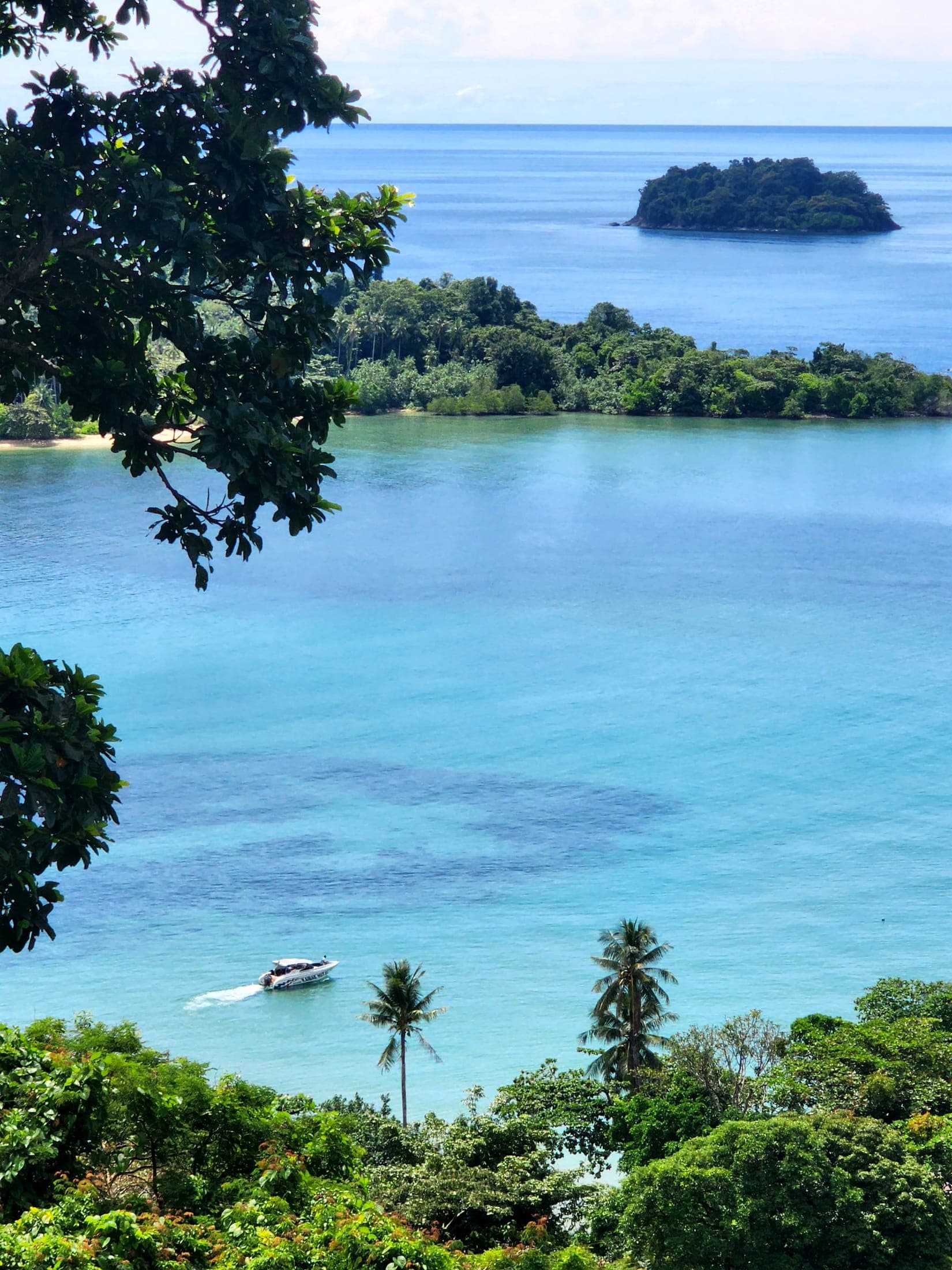
Mid-island and the compromise beach — more families than Lonely Beach, fewer package tours than White Sand. The sand is modest by the island's standards and a lot of stone shows through at low tide, so swimming is better on a rising one. Koh Man Nai sits 400 metres offshore, and the viewpoint on the main road just south of the village looks straight down onto it.
Lonely Beach
Where independent travellers end up, and where we are. The sand is at the northern end, between Nature Beach and Siam Beach; south of the resorts the shore turns to rock. The bar street runs late and the kitchens are small and cheap. The water is unusually deep for Koh Chang — you can still swim here at low tide when other beaches have you wading.
Bailan Bay
Immediately south of Lonely Beach and much quieter. Red sand and stones rather than a swimming beach, a handful of bungalows and a few small bars. People come for the calm rather than the water.
Klong Kloi
Wide and shallow in the far south, past the turn to Bang Bao. The Bang Bao peninsula shelters it from the southwest monsoon, which makes it the one beach on the island where the sea is usually calm in the rainy season. Beach bars along the sand, and busy with day trippers.
When to come
High season · November – April
Comfortable, sunny weather, calm sea, everything open. The best time for beaches, boat trips and the island's social life — and the time to book well ahead.
Low season · May – October
Warm, green and much emptier. Rain comes in bursts rather than all day. Beaches are quiet, roads are free, prices drop by up to 30%, and you rarely need to book ahead.
Nature & national park
Mu Ko Chang National Marine Park covers the island and the smaller islands around it. Inland there are waterfalls and forest trails; offshore there are coral reefs and the dive sites the island is known for. Elephants, hornbills and macaques all live here — the macaques come down to Lonely Beach occasionally and will take anything left unattended.
Diving & snorkelling
Koh Chang is the diving of the eastern Gulf. The schools here work a dozen or so sites in the archipelago, almost all of them within an hour of Bang Bao pier, where the boats leave from. Beginners and snorkellers go to the Koh Rang marine park south of the island — small islands and rock pinnacles at 10 to 15 metres, shallow enough that a snorkeller sees much of what the divers do. The site everyone comes for is the HTMS Chang: a 100-metre ex-navy transport sunk in 2012 as an artificial reef and the largest wreck in Thailand, with the deck around 25 metres, so it takes an Advanced ticket. Diving runs all year, but the sea is calmest and clearest from November to May.
Lonely Beach
A neighbourhood guide to the stretch of Koh Chang we live on — what is where, how far it is, and what is worth your evening.